Showing posts with label Mallika A/P Raman M 20101000299. Show all posts

Wednesday, December 14, 2011

Shulman, Lee

Lee Shulman


No reason has been cited for the Wikify tag on this article.
·         Please replace HTML markup with wiki markup where appropriate.
·         Add wikilinks. Where appropriate, make links to other articles by putting "[[" and "]]" on either side of relevant words (see WP:LINK for more information) and check that your links work as expected. Please do not link terms that most readers are familiar with, such as common occupations, well-known geographical terms, and everyday items.
·         Format the lead. Create or improve the lead paragraph.
·         Arrange section headers as described at Wikipedia:Guide to layout.
·         Add an infobox if it is appropriate for the article.

Lee S. Shulman is an educational psychologist who has made notable contributions to the study of teacher education, assessment of teaching, and education in the fields of medicine, science and mathematics. He is a professor emeritus at the Stanford University School of Education, president of the Carnegie Foundation for the Advancement of Teaching, past president of the American Educational Research Association, and the recipient of several awards recognizing his educational research. From 1963 to 1982, Shulman was a faculty member at Michigan State University, where he founded and co-directed the Institute for Research on Teaching (IRT).
Among his many achievements, Shulman is credited with bringing the phrase "Pedagogical Content Knowledge(PCK)" into research discourse. Shulman is the 2006 recipient of the University of Louisille Grawemeyer Award in Education.
External links
·         Grawemeyer Award

Educational offices
President of the
Succeeded byDavid Berliner

Pedagogical Content Knowledge (PCK)
Shulman (1986) advanced thinking about teacher knowledge by introducing the idea of pedagogical content knowledge. He claimed that the emphases on teachers' subject knowledge and pedagogy were being treated as mutually exclusive domains in research concerned with these domains (1987, p. 6). The practical consequence of such exclusion was production of teacher education programs in which a focus on either subject matter or pedagogy dominated. To address this dichotomy, he proposed to consider the necessary relationship between the two by introducing the notion of PCK.
This knowledge includes knowing what teaching approaches fit the content, and likewise, knowing how elements of the content can be arranged for better teaching. This knowledge is different from the knowledge of a disciplinary expert and also from the general pedagogical knowledge shared by teachers across disciplines. PCK is concerned with the representation and formulation of concepts, pedagogical techniques, knowledge of what makes concepts difficult or easy to learn, knowledge of students’ prior knowledge and theories of epistemology. It also involves knowledge of teaching strategies that incorporate appropriate conceptual representations, to address learner difficulties and misconceptions and foster meaningful understanding. It also includes knowledge of what the students bring to the learning situation, knowledge that might be either facilitative or dysfunctional for the particular learning task at hand. This knowledge of students includes their strategies, prior conceptions (both "naïve" and instructionally produced); misconceptions students are likely to have about a particular domain and potential misapplications of prior knowledge.
PCK exists at the intersection of content and pedagogy. Thus it does not refer to a simple consideration of both content and pedagogy, together but in isolation; but rather to an amalgam of content and pedagogy thus enabling transformation of content into pedagogically powerful forms. PCK represents the blending of content and pedagogy into an understanding of how particular aspects of subject matter are organized, adapted, and represented for instruction. Shulman argued that having knowledge of subject matter and general pedagogical strategies, though necessary, were not sufficient for capturing the knowledge of good teachers. To characterize the complex ways in which teachers think about how particular content should be taught, he argued for "pedagogical content knowledge" as the content knowledge that deals with the teaching process, including "the ways of representing and formulating the subject that make it comprehensible to others" (p. 9). If teachers were to be successful they would have to confront both issues (of content and pedagogy) simultaneously, by embodying "the aspects of content most germane to its teachability" (Shulman, 1986, p. 9). At the heart of PCK is the manner in which subject matter is transformed for teaching. This occurs when the teacher interprets the subject matter, finding different ways to represent it and make it accessible to learners.
The notion of PCK has been extended (and critiqued) by scholars after Shulman (for instance see Cochran, DeRuiter, & King, 1993; van Driel, Verloop, & De Vos, 1998). In fact, Shulman’s initial description of teacher knowledge included many more categories (such as curriculum knowledge, knowledge of educational contexts, etc.). Matters are further complicated by the fact that Shulman has himself proposed multiple lists in different publications, that lack, in his own words, "great cross-article consistency" (Shulman, 1986; p. 8). Our emphasis on PCK is based on Shulman’s acknowledgment that "pedagogical content knowledge is of special interest because it identifies the distinctive bodies of knowledge for teaching. It represents the blending of content and pedagogy into an understanding of how particular topics, problems, or issues are organized, represented, and adapted to the diverse interests and abilities of learners, and presented for instruction" (p. 8). Moreover, our emphasis on PCK is consistent with the work of many other scholars and recent educational reform documents. Since its introduction in 1987, PCK has become a widely useful and used notion. For instance in the area of science education scholars such as Anderson and Mitchner (1994); Hewson and Hewson (1988); Cochran, King, and DeRuiter (1993); Hume and Berry (2010); and professional organizations such as the National Science Teachers Association (NSTA, 1999) and National Council for the Accreditation of Teacher Education (NCATE, 1997) have all emphasized the value of PCK for teacher preparation and teacher professional development. An analysis of "Teacher Educator’s handbook: Building a knowledge base for the preparation of teachers" (Murray, 1996) shows Shulman as the fourth most cited author of the close to 1500 authors in the book’s author index with an overwhelming majority of those references made to this concept of PCK (Murray, 1996, referred by Segall, 2004). The notion of PCK, since its introduction in 1987, has permeated the scholarship that deals with teacher education in general and the subject matter education in particular (See for example, Ball, 1996; Cochran, King & DeRuiter, 1993; Grossman, 1990; Ma, 1999; Shulman, 1987; Wilson, Shulman, & Richert, 1987). It is valued as an epistemological concept that usefully blends together the traditionally separated knowledge bases of content and pedagogy.
Diagrammatically, we can represent Shulman’s contribution to the scholarship of teacher knowledge by connecting the two circles, so that their intersection represents Pedagogical Content Knowledge as the interplay between pedagogy and content. In Shulman’s words, this intersection contains within it, "the most regularly taught topics in one’s subject area, the most useful forms of representation of those ideas, the most powerful analogies, illustrations, examples, explanations, and demonstrations - in a word, the ways of representing and formulating the subject that make it comprehensible to others" (Shulman, 1986, p. 9).
Although Shulman did not discuss technology and its relationship to pedagogy and content, we do not believe that these issues were considered unimportant. Rather, the intent is to now bring explicit attention to these issues by considering how technology interacts with pedagogy as Technological Pedagogical Knowledge (TPK), with content as Technological Content Knowledge (TCK), and jointly as Technological Pedagogical Content Knowledge (TPCK).
Current academic writers on the subject

Name
Shulman, Lee
Alternative names
Short description
Date of birth
Place of birth
Date of death
Place of death

Adolf Hitler


Adolf Hitler


Adolf Hitler lahir tahun 1889 di Braunau, Austria. Sebagai remaja dia merupakan seorang seniman gagal yang kapiran dan kadang-kadang dalam usia mudanya


dia menjadi seorang nasionalis Jerman yang fanatik. Di masa Perang Dunia ke-I, dia masuk Angkatan Bersenjata Jerman, terluka dan peroleh dua medali untuk keberaniannya.

Kekalahan Jerman membikinnya terpukul dan geram. Di tahun 1919 tatkala umurnya menginjak tiga puluh tahun, dia bergabung dengan partai kecil berhaluan kanan di Munich, dan segera partai ini mengubah nama menjadi Partai Buruh Nasionalis Jerman (diringkas Nazi). Dalam tempo dua tahun dia menanjak jadi pemimpin yang tanpa saingan yang dalam julukan Jerman disebut “Fuehrer.”

Di bawah kepemimpinan Hitler, partai Nazi dengan kecepatan luar biasa menjadi suatu kekuatan dan di bulan Nopember 1923 percobaan kupnya gagal. Kup itu terkenal dengan sebutan “The Munich Beer Hall Putsch.” Hitler ditangkap, dituduh pengkhianat, dan terbukti bersalah. Tetapi, dia dikeluarkan dari penjara sesudah mendekam di sana kurang dari setahun.

Di tahun 1928 partai Nazi masih merupakan partai kecil. Tetapi, depressi besar-besaran membikin rakyat tidak puas dengan partai-partai politik yang besar dan sudah mapan. Dalam keadaan seperti ini partai Nazi menjadi semakin kuat, dan di bulan Januari 1933, tatkala umurnya empat puluh empat tahun, Hitler menjadi Kanselir Jerman.

Dengan jabatan itu, Hitler dengan cepat dan cekatan membentuk kediktatoran dengan menggunakan aparat pemerintah melabrak semua golongan oposisi. Perlu dicamkan, proses ini bukanlah lewat erosi kebebasan sipil dan hak-hak pertahankan diri terhadap tuduhan-tuduhan kriminal, tetapi digarap dengan sabetan kilat dan sering sekali partai Nazi tidak ambil pusing dengan prosedur pengajuan di pengadilan samasekali. Banyak lawan-lawan politik digebuki, bahkan dibunuh langsung di tempat. Meski begitu, sebelum pecah Perang Dunia ke-2, Hitler meraih dukungan sebagian terbesar penduduk Jerman karena dia berhasil menekan jumlah pengangguran dan melakukan perbaikan-perbaikan ekonomi.

Hitler kemudian merancang jalan menuju penaklukan-penaklukan yang ujung-ujungnya membawa dunia ke kancah Perang Dunia ke-2. Dia merebut daerah pertamanya praktis tanpa lewat peperangan samasekali. Inggris dan Perancis terkepung oleh pelbagai macam kesulitan ekonomi, karena itu begitu menginginkan perdamaian sehingga mereka tidak ambil pusing tatkala Hitler mengkhianati Persetujuan Versailles dengan cara membangun Angkatan Bersenjata Jerman. Begitu pula mereka tidak ambil peduli tatkala Hitler menduduki dan memperkokoh benteng di Rhineland (1936), dan demikian juga ketika Hitler mencaplok Austria (Maret 1938). Bahkan mereka terima sambil manggut-manggut ketika Hitler mencaplok Sudetenland, benteng pertahanan perbatasan Cekoslowakia. Persetujuan internasional yang dikenal dengan sebutan “Pakta Munich” yang oleh Inggris dan Perancis diharapkan sebagai hasil pembelian “Perdamaian sepanjang masa” dibiarkan terinjak-injak dan mereka bengong ketika Hitler merampas sebagian Cekoslowakia beberapa bulan kemudian karena Cekoslowakia samasekali tak berdaya. Pada tiap tahap, Hitler dengan cerdik menggabung argumen membenarkan tindakannya dengan ancaman bahwa dia akan perang apabila hasratnya dianggap sepi, dan pada tiap tahap negara-negara demokrasi merasa gentar dan mundur melemah.


Tetapi, Inggris dan Perancis berketetapan hati mempertahankan Polandia, sasaran Hitler berikutnya. Pertama Hitler melindungi dirinya dengan jalan penandatangan pakta “Tidak saling menyerang” bulan Agustus 1939 dengan Stalin (hakekatnya perjanjian itu perjanjian agresi karena keduanya bersepakat bagaimana membagi dua Polandia buat kepentingan masing-masing). Sembilan hari kemudian, Jerman menyerang Polandia dan enam belas hari sesudah itu Uni Soviet berbuat serupa. Meskipun Inggris dan Perancis mengumumkan perang terhadap Jerman, Polandia segera dapat ditaklukkan.

Tahun puncak kehebatan Hitler adalah tahun 1940. Bulan April, Angkatan Bersenjatanya melabrak Denmark dan Norwegia. Bulan Mei, dia menerjang Negeri Belanda, Belgia, dan Luxemburg. Bulan Juni, Perancis tekuk lutut. Tetapi pada tahun itu pula Inggris bertahan mati-matian terhadap serangan udara Jerman-terkenal dengan julukan “Battle of Britain” dan Hitler tak pernah sanggup menginjakkan kaki di bumi Inggris.

Pasukan Jerman menaklukkan Yunani dan Yugoslavia di bulan April 1941. Dan di bulan Juni tahun itu pula Hitler merobek-robek “Perjanjian tidak saling menyerang” dengan Uni Soviet dan membuka penyerbuan. Angkatan Bersenjata Jerman dapat menduduki bagian yang amat luas wilayah Rusia tetapi tak mampu melumpuhkannya secara total sebelum musim dingin. Meski bertempur lawan Inggris dan Rusia, tak tanggung-tanggung Hitler memaklumkan perang dengan Amerika Serikat bulan Desember 1941 dan beberapa hari kemudian Jepang melabrak Amerika Serikat, mengobrak-abrik pangkalan Angkatan Lautnya di Pearl Harbor.

Di pertengahan tahun 1942 Jerman sudah menguasai bagian terbesar wilayah Eropa yang tak pernah sanggup dilakukan oleh siapa pun dalam sejarah. Tambahan pula, dia menguasai Afrika Utara. Titik balik peperangan terjadi pada parohan kedua tahun 1942 tatkala Jerman dikalahkan dalam pertempuran rumit di El-Alamein di Mesir dan Stalingrad di Rusia. Sesudah kemunduran ini, nasib baik yang tadinya memayungi tentara Jerman angsur-berangsur secara tetap meninggalkannya. Tetapi, kendati kekalahan Jerman tampaknya tak terelakkan lagi, Hitler menolak menyerah. Bukannya dia semakin takut, malahan meneruskan penggasakan selama lebih dari dua tahun sesudah Stalingrad. Ujung cerita yang pahit terjadi pada musim semi tahun 1945. Hitler bunuh diri di Berlin tanggal 30 April dan tujuh hari sesudah itu Jerman menyerah kalah.

Selama masa kuasa, Hitler terlibat dalam tindakan pembunuhan massal yang tak ada tolok tandingannya dalam sejarah. Dia seorang rasialis yang fanatik, spesial terhadap orang Yahudi yang dilakukannya dengan penuh benci meletup-letup. Secara terbuka dia mengumumkan bunuh tiap orang Yahudi di dunia. Di masa pemerintahannya, Nazi membangun kampkamp pengasingan besar, dilengkapi dengan kamar gas. Di tiap daerah yang menjadi wilayah kekuasaannya, orang-orang tak bersalah, lelaki dan perempuan serta anak-anak digiring dan dijebloskan ke dalam gerbong ternak untuk selanjutnya dicabut nyawanya di kamar-kamar gas. Dalam jangka waktu hanya beberapa tahun saja sekitar 6.000.000 Yahudi dipulangkan ke alam baka.

Berikut pernyataan Hitler yang paling terkenal :


“Ich konnte all die Juden in dieser Welt zu zerstören, aber ich lasse ein wenig drehte-on,so können Sie herausfinden, warum ich sie getötet”

(Bisa saja saya musnahkan semua Yahudi di dunia ini, tapi saya sisakan sedikit yang hidup, agar kamu nantinya dapat mengetahui mengapa saya membunuh mereka)

Yahudi bukan satu-satunya golongan yang jadi korban Hitler. Di masa pemerintahan kediktatorannya, orang-orang Rusia dan Gypsy juga dibabat, seperti juga halnya menimpa orang-orang yang dianggap termasuk ras rendah atau musuh-musuh negara. Jangan sekali-kali dibayangkan pembunuhan ini dilakukan secara spontan, atau dalam keadaan panas dan sengitnya peperangan. Melainkan Hitler membangun kamp mautt itu dengan organisasi yang rapi dan cermat seakan-akan dia merancang sebuah perusahaan bisnis besar. Data-data tersusun, jumlah ditetapkan, dan mayat-mayat secara sistematis dipreteli anggota-anggota badannya yang berharga seperti gigi emas dan cincin kawin. Juga banyak dari jenazah-jenazah itu dimanfaatkan buat pabrik sabun. Begitu telitinya rencana pembunuhan oleh Hitler hingga bahkan di akhir-akhir perang akan selesai, tatkala Jerman kekurangan bahan-bahan buat penggunaan baik sipil maupun militer, gerbong ternak masih terus menggelinding menuju kamp-kamp pembunuhan dalam rangka missi teror non-militer.

Dalam banyak hal, jelas sekali kemasyhuran Hitler akan tamat. Pertama, dia oleh dunia luas dianggap manusia yang paling jahanam sepanjang sejarah. Jika orang seperti Nero dan Caligula yang salah langkahnya amat tidak berarti jika dibanding Hitler dan Hitler masih saja tetap jadi lambang kekejaman selama 20 abad, tampaknya tak melesetlah jika orang meramalkan bahwa Hitler yang begitu buruk reputasinya tak terlawankan dalam sejarah akan dikenang orang untuk berpuluh-puluh abad lamanya.

Lebih dari itu, tentu saja, Hitler akan dikenang sebagai biang keladi pecahnya Perang Dunia ke-2, perang terbesar yang pernah terjadi di atas bumi. Kemajuan persenjataan nuklir seakan merupakan kemustahilan akan terjadi perang yang berskala luas di masa depan. Karena itu, bahkan dua atau tiga ribu tahun lagi dari sekarang, Perang Dunia ke-2 mungkin masih dianggap kejadian besar dalam sejarah.

Lebih jauh lagi, Hitler akan tetap terkenal karena seluruh kisah menyangkut dirinya begitu menyeramkan dan menarik, betapa seorang asing (Hitler dilahirkan di Austria, bukan Jerman), betapa seorang yang tak punya pengalaman politik samasekali, tak punya duit, tak punya hubungan politik, mampu –dalam masa kurang dari empat belas tahun– menjadi pemimpin kekuatan dunia yang menonjol, sungguh-sungguh mengagumkan. Kemampuannya selaku orator betul-betul luar biasa. Diukur dari kemampuannya menggerakkan massa dalam tindakan-tindakan penting, bisa dikatakan bahwa Hitler merupakan seorang orator terbesar dalam sejarah. Akhirnya, cara kotor yang mengangkatnya ke puncak kekuasaan, sekali terpegang tangannya tak akan cepat terlupakan.

Mungkin tak ada tokoh dalam sejarah yang punya pengaruh begitu besar terhadap generasinya ketimbang Adolf Hitler. Di samping puluhan juta orang yang mati dalam peperangan yang dia biang keladinya, atau mereka yang mati di kamp konsentrasi, masih berjuta juta orang terlunta-lunta tanpa tempat bernaung atau yang hidupnya berantakan akibat perang.

Perkiraan lain mengenai pengaruh Hitler harus mempertimbangkan dua faktor. Pertama, banyak yang betul-betul terjadi di bawah kepemimpinannya tak akan pernah terjadi andaikata tanpa Hitler. (Dalam kaitan ini dia amat berbeda dengan tokoh-tokoh seperti
 Charles Darwin atau Simon Bolivar). Tentu saja benar bahwa situasi di Jerman dan Eropa menyediakan kesempatan buat Hitler. Gairah kemiliterannya dan anti Yahudinya, misalnya, memang memukau para pendengamya. Tak tampak tanda-tanda, misalnya, bahwa umumnya bangsa Jerman di tahun 1920-an atau 1930-an bermaksud punya pemerintahan seperti yang digerakkan oleh Hitler, dan sedikit sekali tanda-tanda bahwa pemuka-pemuka Jerman lainnya akan berbuat serupa Hitler. Apa yang dilakukan Hitler sedikit pun tak pernah diduga akan terjadi oleh para pengamat.

Kedua, seluruh gerakan Nazi dikuasai oleh seorang pemimpin hingga ke tingkat yang luar biasa.
 Marx,Lenin, Stalin dan lain-lain pemimpin sama-sama punya peranan terhadap tumbuhnya Komunisme. Tetapi, Nasional Sosialisme tak punya pemimpin penting sebelum munculnya Hitler, begitu pula tak ada sesudahnya. Hitler memimpin partai itu ke puncak kekuasaan dan tetap berada di puncak. Ketika dia mati, partai Nazi dan pemerintahan yang dipimpinnya mati bersamanya.


Tetapi, meski pengaruh Hitler terhadap generasinya begitu besar, akibat dari tindakan-tindakannya di masa depan tampaknya tidaklah seberapa besar. Hitler boleh dibilang gagal total merampungkan sasaran cita-cita yang mana pun, dan akibat-akibat yang tampak pada generasi berikutnya malah kebalikannya dari apa yang ia kehendaki. Misalnya, Hitler bermaksud menyebarkan pengaruh Jerman serta wilayah kekuasaan Jerman. Tetapi, daerah-daerah taklukannya, meski teramat luas, hanyalah bersifat singkat dan sementara. Dan kini bahkan Jerman Barat dan Jerman Timur jika digabung jadi satu masih lebih kecil ketimbang Republik Jerman tatkala Hitler jadi kepala pemerintahan.

Adalah dorongan nafsu Hitler ingin membantai Yahudi. Tetapi lima belas tahun sesudah Hitler berkuasa, sebuah negara Yahudi merdeka berdiri untuk pertama kalinya setelah 2000 tahun. Hitler membenci baik Komunisme maupun Uni Soviet. Tetapi, sesudah matinya dan sebagian disebabkan oleh perang yang dimulainya, Rusia malahan memperluas daerah kekuasaannya di wilayah yang luas di Eropa Timur dan pengaruh Komunisme di dunia malahan semakin berkembang. Hitler menggencet demokrasi malahan bermaksud menghancurkannya, bukan saja di negeri lain melainkan di Jerman sendiri. Namun, Jerman Barat sekarang menjadi negeri yang menjalankan demokrasi dan penduduknya kelihatan lebih membenci kediktatoran dari generasi yang mana pun sebelum masa Hitler.

Apakah sebabnya terjadi kombinasi yang aneh dari pengaruhnya yang luar biasa besar pada saat dia berkuasa dengan pengaruhnya yang begitu mini pada generasi sesudahnya? Akibat-akibat yang ditimbulkan Hitler pada saat hidupnya begitu luar biasa besar sehingga nyatalah Hitler memang layak ditempatkan di urutan agak tinggi dalam daftar buku ini.

Kendati begitu, tentu saja dia mesti ditempatkan di bawah tokoh-tokoh seperti Shih Huang Ti, Augustus Caesar dan Jengis Khan yang perbuatannya mempengaruhi dunia yang berdaya jangkau jauh sesudah matinya. Yang nyaris sejajar kedudukannya dengan Hitler adalah Napoleon dan Alexander Yang Agung. Dalam masa yang begitu singkat, Hitler dapat mengobrak-abrik dunia jauh lebih parah dari kedua orang itu. Hitler ditempatkan di bawah urutan mereka karena mereka punya pengaruh yang lebih lama.

Senjata Rahasia NAZI dan HITLER
1.
 Windkanone Wind Canon


Wind Cannon juga dikembangkan oleh sebuah pabrik di Stuttgart selama perang. Ia adalah jenis senjata yang akan mengeluarkan sebuah jet dari kompresi udara terhadap pesawat terbang musuh. Meriam bekerja dari campuran hidrogen dan oksigen. Eksperimental persidangan dari meriam di Hillersleben menunjukkan bahwa tebal 25mm-kayu papan dapat rusak di jarak 200m. Nitrogen peroksida telah digunakan di beberapa percobaan sehingga warna coklat akan membuat warna jalan yang ditempuh udara dari Wind Canon agar dapat dipantau oleh foto. Meski demikian, meriam yang telah terinstal di atas jembatan Elbe, tetapi tanpa hasil nyata - baik karena tidak ada pesawat terbang atau tidak berhasil (mungkin sebagai salah satu penyebab).

2. LandKruezer P.1000 Ratte


The Landkreuzer P. 1000 Ratte (Ratte=tikus) adalah sebuah PDII desain untuk Nazi Jerman super berat tank dengan berat 1000 ton, atau 1.000.000 kg. Dengan perbandingan, sebuah tank Abrams berat 61,4 ton. Bruhathkayosaurus , yang mungkin merupakan binatang yang paling berat pernah hidup di bumi, memiliki berat antara 175 dan 220 ton, beberapa kali lebih kecil dari Landkreuzer P. 1000 Ratte. Landkreuzer P. 1000 Ratte dirancang oleh Albert Speer, yang memiliki pengalaman lebih sebagai arsitek daripada seorang insinyur.


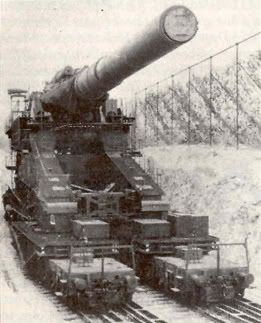
3. Dora Gerat Dora Railway Gun


Dibangun untuk membinasakan Perancis Maginot Line fortifications, Dora Railway Gun terlambat untuk digunakan dalam kampanye melawan Perancis (di mana Maginot Line yang bypassed ). Dora Railway Gun akhirnya digunakan di Sebastopol dimana menembakan 48-7 ton peluru selama 13 hari, menghancurkan pertahanan Soviet dengan kesempurnaan.

4.
 Schallkanone Sound Canon


Pengujian menunjukkan bahwa gelombang tekanan yang dihasilkan dari Sound Canon dengan 2000 kg peledak , anjing pada jarak 40 m telah terbunuh. Sound Canon menghancurkan melalui Parabolic mirror.
Sekurang-kurangnya 50 m radius dari Sound Canon dapat menyebabkan orang tewas atau cedera.

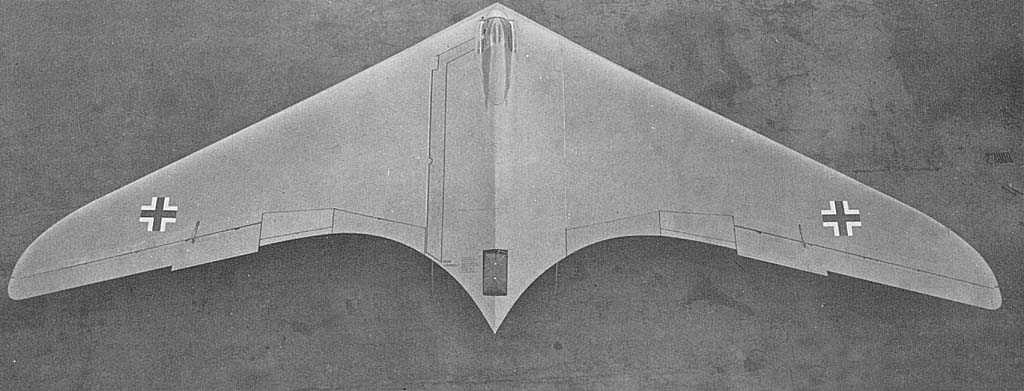
5. Horten Ho 229 Flying Wing


Pada awal 1930an, Horten tertarik dengan desain sayap terbang sebagai metode meningkatkan kinerja gliders. Dalam 1943, Reichsmarschall goring mengeluarkan permintaan untuk merancang proposal untuk membuat pembom yang mampu membawa suatu 1.000 kg (2200 lb) memuat lebih dari 1.000 km (620 mil) di 1.000 km / h (620 mph); yang disebut 3 X 1000 proyek. Konvensional bombers Jerman mencapai markas Allied di Inggris.

PROYEK RAHASIA NAZI JERMAN 

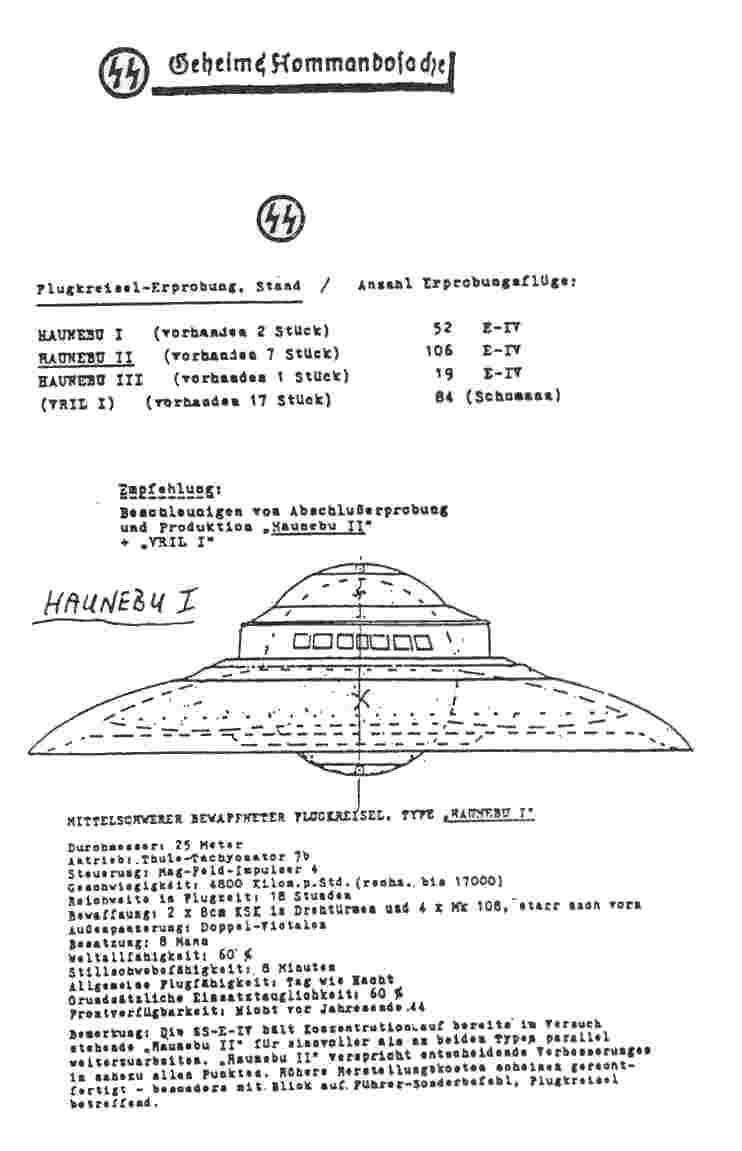
Proyek Haunebu di kerjakan oleh beberapa orang yang tergabung dalam SS E-IV (Entwicklungsstelle 4) dan dipimpin oleh Viktor Schauberger di tahun 1939 berusaha membuat electro-magnetic-gravitic engine yang diupgrade dari Hans Coler’s free energy machine ke dalam enery converter digabung Van De Graaf band generator dan Marconi vortex dynamo.
untuk menghasilkan medan putaran elektromagnetik yang mampu berpengaruh pada gravitasi dan mengecilkan massa…Dan dimasukkan ke desain yang dibuat oleh Thule.. kelanjutannya adalah

The Haunebu I
Terbang pertama tahun 1939 dan telah melalui 52 test flight!.

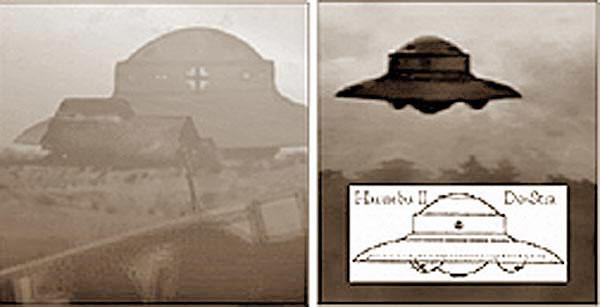
The haunebu II
Jadi di taon 1942,versi gedenya haunebu II yang berdiameter 26m.Mampu membawa 9 orang crew dan mampu mencapai kecepatan supersonic mulai dari 6000 sampai 21000 km/jam dengan durasi terbang 55 jam!!

The haunebu II Do-Stra(Dornier STRAtospharen Flugzeug/Stratospheric Aircraft)
Yang ini bener2 buat perang sekarang..Lanjutannya berdiameter 32m,bisa menangkut 20 krew, mampu mencapai kecepatan hypersonic setara 21000km/jam punya pelindung panas dan melakukan 106 test flight!!
Proyek ini diburu oleh 2 pabrikan besar di Jerman, yaitu Junkers dan Dornier,Tetapi tender ini yang menang Dornier…

The haunebu III
diameternya 71 meter,mampu membawa32 crew dan mampu mencapai 7000 sampe 40000km/jam!! dan mampu bertahan terbang selama 7 sampai 8 minggu..
Nah yang ini lah yang dipake kabur ke antartika oleh Thule sama Vril Maret 1945(2 organisasi rahasia menyangkut proyek ini )

The haunebu IV
diameternya 120m..Sayangnya gak tau lagi kabarnya tentang ini,soalnya semenjak haunebu III dari SS sampe orang2 yang ngebuat pryek ini dilariin ke antartika


Tapi jerman tetep kalah perang kan…


referensi :
http://juliuskurnia.wordpress.com/2008/04/07/adolf-hitler-1889-1945/
http://www.forumkami.com/forum/aneh-tapi-nyata/10338-senjata-rahasia-nazi.html
http://forum.kafegaul.com/showthread.php?t=192051


Top of Form
Dapatkan Update Biografi Terbaru Dari Blog ini! Dengan memasukkan alamat email Anda di bawah ini, maka Anda akan mendapatkan update Biografi terbaru dari Blog ini.

Bottom of Form

Bill Gates

Description: Page semi-protected


Bill Gates


Gates at the
 World Economic Forum in 2007.

Born

William Henry Gates
III


October 28, 1955
 (age 56)

SeattleWashington, U.S.

Residence

Medina, Washington, U.S.

Nationality

American


Harvard University (dropped out)

Occupation

Chairman of Microsoft

Co-Chair of the
 Bill & Melinda Gates Foundation

CEO of
 Cascade Investment

Chairman of
 Corbis

Years active

1975–present

Net worth

Description: increase US$ 59 billion (2011)[1]

Board member of


Religion

Agnostic[2][3]

Spouse

Melinda Gates (m. 1994–present)

Children

3

Parents


Signature

Description: http://upload.wikimedia.org/wikipedia/commons/thumb/f/f3/BillGates_Signature.svg/150px-BillGates_Signature.svg.png

Website


William Henry "Bill" Gates III (born October 28, 1955)[4] is an American business magnate, investor, philanthropist, and author. Gates is the
former CEO and current chairman of
 Microsoft, the software company he founded with Paul Allen. He is consistently ranked among the world's wealthiest people[5] and was the wealthiest overall from 1995 to
2009, excluding 2008, when he was ranked third.
[6] During his career at Microsoft, Gates held the
positions of CEO and
 chief software architect, and remains the largest individual
shareholder, with 6.4 percent of the
 common stock.[7] He has also authored or co-authored several
books.

Gates is one of the best-known entrepreneurs of
the personal computer revolution. Gates has been
 criticized for his business tactics, which have been considered anti-competitive,
an opinion which has in some cases been upheld by the courts.
[8][9] In the later stages of his career, Gates has
pursued a number of philanthropic endeavors, donating large amounts of money to
various charitable organizations and scientific research programs through the
 Bill & Melinda Gates Foundation, established in 2000.

Gates stepped down as chief executive officer of
Microsoft in January 2000. He remained as chairman and created the position of
chief software architect. In June 2006, Gates announced that he would be
transitioning from full-time work at Microsoft to part-time work, and full-time
work at the Bill & Melinda Gates Foundation. He gradually transferred his
duties to
 Ray Ozzie, chief software architect, and Craig Mundie, chief research and strategy officer. Gates' last full-time day
at Microsoft was June 27, 2008. He remains at Microsoft as non-executive
chairman.


Early life


Description: http://bits.wikimedia.org/skins-1.18/common/images/magnify-clip.png

Bill Gates was photographed by the Albuquerque,
New Mexico police in 1977 after a traffic violation (details of which have been
lost over time).

Gates was born in Seattle, Washington, to William H. Gates, Sr. and Mary Maxwell Gates. His parents are of English, German, and Scotch-Irish descent.[10][11] His father was a prominent lawyer, and his
mother served on the board of directors for
 First Interstate BancSystem and the United Way. Gates's maternal grandfather was J. W. Maxwell, a national bank president. Gates has one elder sister, Kristi
(Kristianne), and one younger sister, Libby. He was the fourth of his name in
his family, but was known as William Gates III or "
Trey" because his father had the "II"
suffix.
[12] Early on in his life, Gates' parents had a law
career in mind for him.
[13] When Gates was young, his family regularly
attended a
 Congregational church.[14][15][16]

At 13 he enrolled in the Lakeside School, an exclusive preparatory school.[17] When he was in the eighth grade, the Mothers
Club at the school used proceeds from Lakeside School's
 rummage sale to buy an Teletype Model 33 ASR terminal and a block of computer
time on a
 General Electric (GE) computer for the school's students.[18] Gates took an interest in programming the GE
system in
 BASIC, and was excused from math classes to pursue his interest. He
wrote his first computer program on this machine: an implementation of
 tic-tac-toe that allowed users to play games against the computer. Gates was
fascinated by the machine and how it would always execute software code
perfectly. When he reflected back on that moment, he said, "There was just
something neat about the machine."
[19] After the Mothers Club donation was exhausted,
he and other students sought time on systems including
 DEC PDP minicomputers. One of these systems was a PDP-10 belonging to Computer Center Corporation (CCC),
which banned four Lakeside students—Gates,
 Paul Allen, Ric
Weiland
, and Kent Evans—for the summer after it caught them
exploiting bugs in the
 operating system to obtain free computer time.[20]

At the end of the ban, the four students offered
to find bugs in CCC's software in exchange for computer time. Rather than use
the system via Teletype, Gates went to CCC's offices and studied
 source code for various programs that ran on the system, including programs in FORTRAN, LISP, and machine language. The arrangement with CCC continued until 1970,
when the company went out of business. The following year, Information
Sciences, Inc. hired the four Lakeside students to write a payroll program in
 COBOL, providing them computer time and royalties.
After his administrators became aware of his programming abilities, Gates wrote
the school's computer program to schedule students in classes. He modified the
code so that he was placed in classes with mostly female students. He later
stated that "it was hard to tear myself away from a machine at which I
could so unambiguously demonstrate success."
[19] At age 17, Gates formed a venture with Allen,
called
 Traf-O-Data, to make traffic counters based on the Intel 8008processor.[21] In early 1973, Bill Gates served as a
congressional page in the U.S. House of Representatives.
[22]

Gates graduated from Lakeside School in 1973. He
scored 1590 out of 1600 on the
 SAT[23] and enrolled at Harvard College in the autumn of 1973.[24]While at Harvard, he met Steve Ballmer, who later succeeded Gates as CEO of Microsoft.

In his sophomore year, Gates devised an
algorithm for
 pancake sorting as a solution to one of a series of unsolved
problems
[25] presented in a combinatorics class by Harry Lewis, one of his professors. Gates' solution held the record as the
fastest version for over thirty years;[25]
[26] its successor is faster by only one percent.[25] His solution was later formalized in a published
paper in collaboration with Harvard computer scientist
 Christos Papadimitriou.[27]

Gates did not have a definite study plan while a
student at Harvard[28]
 and spent a lot of time using the school's
computers. Gates remained in contact with Paul Allen, and he joined him at
Honeywell during the summer of 1974.
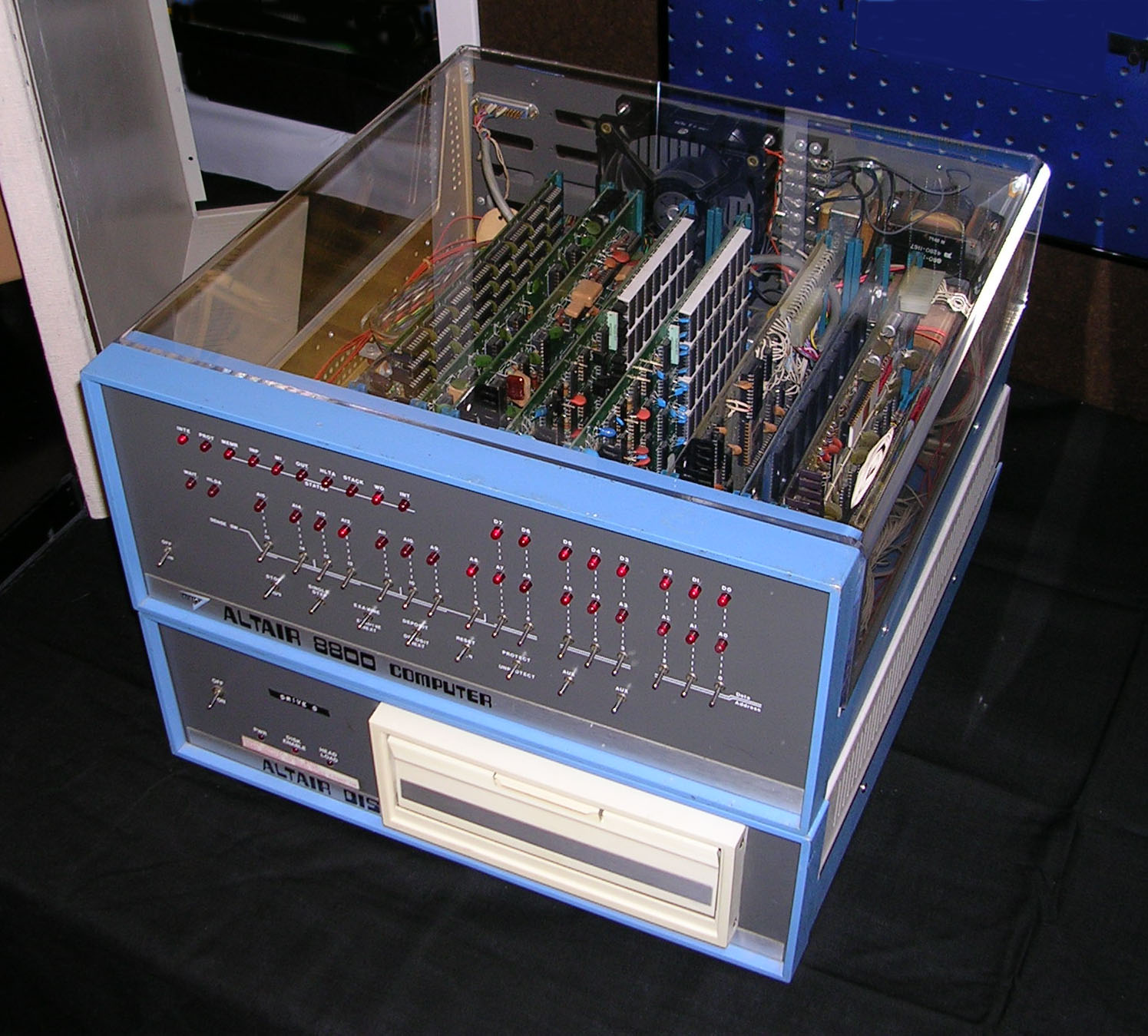
[29] The following year saw the release of the MITS Altair 8800 based on the Intel 8080 CPU, and Gates and Allen saw this as the
opportunity to start their own computer software company.
[30] He had talked this decision over with his
parents, who were supportive of him after seeing how much Gates wanted to start
a company.
[28]


Microsoft


Main articles: History of Microsoft and Microsoft

BASIC


Description: http://bits.wikimedia.org/skins-1.18/common/images/magnify-clip.png

MITS Altair 8800 Computer with 8-inch
(200 mm) floppy disk system

After reading the January 1975 issue of Popular Electronics that demonstrated the Altair 8800, Gates contacted Micro Instrumentation and Telemetry Systems(MITS), the creators of the new microcomputer,
to inform them that he and others were working on a
 BASIC interpreter for the platform.[31] In reality, Gates and Allen did not have an
Altair and had not written code for it; they merely wanted to gauge MITS's
interest. MITS president
 Ed Roberts agreed to meet them for a demo, and over the course of a few weeks
they developed an Altair
 emulator that ran on a minicomputer, and then the BASIC
interpreter. The demonstration, held at MITS's offices in Albuquerque, was a
success and resulted in a deal with MITS to distribute the interpreter as
 Altair BASIC. Paul Allen was hired into MITS,[32]and Gates
took a leave of absence from Harvard to work with Allen at MITS in Albuquerque
in November 1975. They named their partnership "Micro-Soft" and had
their first office located in Albuquerque.
[32] Within a year, the hyphen was dropped, and on
November 26, 1976, the trade name "Microsoft" was registered with the
Office of the Secretary of the State of New Mexico.
[32] Gates never returned to Harvard to complete his
studies.

Microsoft's BASIC was popular with computer
hobbyists, but Gates discovered that a pre-market copy had leaked into the
community and was being widely copied and distributed. In February 1976, Gates
wrote an
 Open Letter to Hobbyists in the MITS newsletter saying that MITS could
not continue to produce, distribute, and maintain high-quality software without
payment.
[33] This letter was unpopular with many computer
hobbyists, but Gates persisted in his belief that software developers should be
able to demand payment. Microsoft became independent of MITS in late 1976, and
it continued to develop programming language software for various systems.
[32] The company moved from Albuquerque to its new
home in
 Bellevue, Washington on January 1, 1979.[31]

During Microsoft's early years, all employees
had broad responsibility for the company's business. Gates oversaw the business
details, but continued to write code as well. In the first five years, Gates
personally reviewed every line of code the company shipped, and often rewrote
parts of it as he saw fit.
[34]

IBM partnership

In 1980, IBM approached Microsoft to write the BASIC
interpreter for its upcoming personal computer, the
 IBM PC. When IBM's representatives mentioned that they
needed an operating system, Gates referred them to
 Digital Research (DRI), makers of the widely used CP/M operating system.[35] IBM's discussions with Digital Research went
poorly, and they did not reach a licensing agreement. IBM representative Jack
Sams mentioned the licensing difficulties during a subsequent meeting with
Gates and told him to get an acceptable operating system. A few weeks later
Gates proposed using
 86-DOS (QDOS), an operating system similar to CP/M that Tim Paterson of Seattle Computer Products (SCP) had made for hardware similar to the PC.
Microsoft made a deal with SCP to become the exclusive licensing agent, and
later the full owner, of 86-DOS. After adapting the operating system for the
PC, Microsoft delivered it to IBM as
 PC-DOS in exchange for a one-time fee of $50,000. Gates
did not offer to transfer the
 copyright on the operating system, because he believed
that other hardware vendors would clone IBM's system.
[36] They did, and the sales of MS-DOS made Microsoft a major player in the industry.[37]

Gates oversaw Microsoft's company restructuring
on June 25, 1981, which re-incorporated the company in Washington state and
made Gates President of Microsoft and the Chairman of the Board.
[31]

Windows

Microsoft launched its first retail version of Microsoft Windows on November 20, 1985, and in August, the company
struck a deal with
 IBM to develop a separate operating system called OS/2. Although the two companies successfully
developed the first version of the new system, mounting creative differences
caused the partnership to deteriorate. It ended in 1991 when Gates led
Microsoft to develop a version of OS/2 independently from IBM.
[38]

Management style

From Microsoft's founding in 1975 until 2006,
Gates had primary responsibility for the company's product strategy. He
aggressively broadened the company's range of products, and wherever Microsoft
achieved a dominant position he vigorously defended it. He gained a reputation
for being distant to others; as early as 1981 an industry executive complained
in public that "Gates is notorious for not being reachable by phone and for
not returning phone calls."
[39]

As an executive, Gates met regularly with
Microsoft's senior managers and program managers. Firsthand accounts of these
meetings describe him as verbally combative, berating managers for perceived
holes in their business strategies or proposals that placed the company's
long-term interests at risk.
[40][41] He often interrupted presentations with such
comments as, "That's the stupidest thing I've ever heard!"
[42] and, "Why don't you just give up your options and join the Peace Corps?"[43] The target of his outburst then had to defend
the proposal in detail until, hopefully, Gates was fully convinced.
[42] When subordinates appeared to be
procrastinating, he was known to remark sarcastically, "I'll do it over
the weekend."
[44][45][46]

Gates' role at Microsoft for most of its history
was primarily a management and executive role. However, he was an active
software developer in the early years, particularly on the company's
programming language products. He has not officially been on a
development team since working on the
 TRS-80 Model 100,[47] but wrote code as late as 1989 that shipped in
the company's products.
[45] On June 15, 2006, Gates announced that he would
transition out of his day-to-day role over the next two years to dedicate more
time to philanthropy. He divided his responsibilities between two successors,
placing
 Ray Ozzie in charge of day-to-day management and Craig Mundie in charge of long-term product strategy.[48]

Antitrust litigation


Description: http://bits.wikimedia.org/skins-1.18/common/images/magnify-clip.png

Bill Gates giving his deposition at Microsoft on
August 27, 1998

Many decisions that led to antitrust litigation over Microsoft's business practices have had Gates'
approval. In the 1998
 United States v. Microsoft case, Gates gave deposition testimony that
several journalists characterized as evasive. He argued with examiner
 David Boies over the contextual meaning of words like "compete",
"concerned" and "we".
[49] BusinessWeek reported:

Early rounds of his
deposition show him offering obfuscatory answers and saying 'I don't recall,'
so many times that even the presiding judge had to chuckle. Worse, many of the
technology chief's denials and pleas of ignorance were directly refuted by
prosecutors with snippets of e-mail that Gates both sent and received.
[50]

Gates later said he had simply resisted attempts
by Boies to mischaracterize his words and actions. As to his demeanor during
the deposition, he said, "Did I fence with Boies? ... I plead guilty.
Whatever that penalty is should be levied against me: rudeness to Boies in the
first degree."
[51] Despite Gates's denials, the judge ruled that
Microsoft had committed
 monopolization and tying, and blocking competition, both in violation of
the
 Sherman Antitrust Act.[51]

Appearance in ads

Gates appeared in a series of ads to promote
Microsoft in 2008. The first commercial, co-starring
 Jerry Seinfeld, is a 90-second talk between strangers as
Seinfeld walks up on a discount shoe store (Shoe Circus) in a mall and notices
Gates buying shoes inside. The salesman is trying to sell Mr. Gates shoes that
are a size too big. As Gates is buying the shoes, he holds up his discount
card, which uses a slightly altered version of his own mugshot of his arrest in
 New Mexico in 1977 for a traffic violation.[52] As they are walking out of the mall, Seinfeld
asks Gates if he has melded his mind to other developers, after getting a yes,
he then asks if they are working on a way to make computers edible, again
getting a yes. Some say that this is an homage to Seinfeld's own show about
"nothing" (
Seinfeld).[53] In a second commercial in the series, Gates and
Seinfeld are at the home of an average family trying to fit in with normal
people.


Post-Microsoft


Since leaving Microsoft, Gates continues his
philanthropy and, among other projects, purchased the video rights to the
 Messenger Lectures series called The Character of Physical Law, given at Cornell University by Richard Feynman in 1964 and recorded by the BBC. The videos are
available online to the public at Microsoft's
 Project Tuva.[54][55]

In April 2010, Gates was invited to visit and
speak at the
 Massachusetts Institute of Technology where he asked the students to take on the hard
problems of the world in their futures.
[56][57]


Personal life


Description: http://bits.wikimedia.org/skins-1.18/common/images/magnify-clip.png

Bill and Melinda Gates, June 2009

Gates married Melinda French on January 1, 1994.
They have two daughters, Jennifer Katharine (1996) and Phoebe Adele (2002), and
one son, Rory John (1999).

The Gates's home is an earth-sheltered house in the side of a hill overlooking Lake Washington in Medina. According to King County public records, as of 2006 the total assessed value of the
property (land and house) is $125 million, and the annual property tax is
$991,000.

His 66,000 sq ft (6,100 m2)
estate has a 60-foot (18 m) swimming pool with an underwater music system,
as well as a 2,500 sq ft (230 m2) gym and a
1,000 sq ft (93 m2) dining room.
[58]

Also among Gates' private acquisitions is the Codex Leicester, a collection of writings by Leonardo da Vinci, which Gates bought for $30.8 million at
an auction in 1994.
[59] Gates is also known as an avid reader, and the
ceiling of his large home library is engraved with a quotation from
 The Great Gatsby.[60]He also enjoys playing bridge, tennis, and golf.[61][62]

Gates was number one on the Forbes 400 list from 1993 through to 2007 and number one on Forbes list of The World's Richest People from 1995 to 2007 and 2009. In 1999, Gates's
wealth briefly surpassed $101 billion, causing the media to call him a
"centibillionaire".
[63] Since 2000, the nominal value of his Microsoft
holdings has declined due to a fall in Microsoft's stock price after the
 dot-com bubble burst and the multi-billion dollar donations he
has made to his charitable foundations. In a May 2006 interview, Gates
commented that he wished that he were not the richest man in the world because
he disliked the attention it brought.
[64] Gates has several investments outside Microsoft,
which in 2006 paid him a salary of $616,667 and $350,000 bonus totalling
$966,667.
[65] He founded Corbis, a digital imaging company, in 1989. In 2004 he
became a director of
 Berkshire Hathaway, the investment company headed by long-time
friend
 Warren Buffett.[66] In March 2010 Bill Gates was bumped down to the
second wealthiest man behind
 Carlos Slim.

Philanthropy


Description: http://bits.wikimedia.org/skins-1.18/common/images/magnify-clip.png

Gates (second from right) with Bono,Queen Rania of Jordan, Former British Prime Minister Gordon Brown, President Umaru
Yar'Adua
 of
Nigeria and other participants in a 'Call to Action on the Millennium
Development Goals' during the Annual Meeting 2008 of the
 World Economic Forumin Davos,
Switzerland

Further information: Bill & Melinda Gates Foundation

Gates began to appreciate the expectations
others had of him when public opinion mounted suggesting that he could give
more of his wealth to charity. Gates studied the work of
 Andrew Carnegie and John D. Rockefeller, and in 1994 sold some of his Microsoft stock
to create the William H. Gates Foundation. In 2000, Gates and his wife combined
three family foundations into one to create the charitable
 Bill & Melinda Gates Foundation, which is the largest transparently operated
charitable foundation in the world.
[67] The foundation allows benefactors access to
information regarding how its money is being spent, unlike other major
charitable organizations such as the
 Wellcome
Trust
.
[68][69] The generosity and extensive philanthropy of David Rockefeller has been credited as a major influence. Gates
and his father met with Rockefeller several times, and modeled their giving in
part on the
 Rockefeller family's philanthropic focus, namely those global
problems that are ignored by governments and other organizations.
[70] As of 2007, Bill and Melinda Gates were the
second-most generous philanthropists in America, having given over
$28 billion to charity.
[71] They plan to eventually give 95% of their wealth
to charity.
[72]

The foundation was at the same time criticized
because it invests assets that it has not yet distributed with the exclusive
goal of maximizing
 return on investment. As a result, its investments include companies
that have been charged with worsening poverty in the same developing countries
where the Foundation is attempting to relieve poverty. These include companies
that pollute heavily, and pharmaceutical companies that do not sell into the
developing world.
[73] In response to press criticism, the foundation
announced in 2007 a review of its investments, to assess social responsibility.
[74] It subsequently canceled the review and stood by
its policy of investing for maximum return, while using voting rights to
influence company practices.
[75]

Gates's wife urged people to learn a lesson from
the philanthropic efforts of the Salwen family, which had sold its home and
given away half of its value, as detailed in
 The Power of Half.[76] Gates and his wife invited Joan Salwen to
Seattle to speak about what the family had done, and on December 9, 2010,
Gates, investor
 Warren Buffett, and Mark Zuckerberg (Facebook's CEO) signed a promise they called
the "Gates-Buffet
 Giving Pledge", in which they promised to donate to
charity at least half of their wealth over the course of time.
[77][78][79]

Recognition

In 1987, Gates was officially declared a
billionaire in the pages of Forbes' 400 Richest People in America issue, just
days before his 32nd birthday. As the world's youngest self-made billionaire,
he was worth $1.25 billion, over $900 million more than he'd been
worth the year before, when he'd debuted on the list.
[80]

Time magazine named Gates one of the 100 people
who most influenced the 20th century
, as well as one of the 100 most
influential people of 2004, 2005, and 2006
. Time also collectively named Gates, his wife Melinda
and U2's lead singer
 Bono as the 2005 Persons of the Year for their humanitarian efforts.[81] In 2006, he was voted eighth in the list of
"Heroes of our time".
[82] Gates was listed in the Sunday Times power list in 1999, named CEO of the year by Chief Executive Officers magazine in 1994, ranked number one in the "Top 50
Cyber Elite" by
 Time in
1998, ranked number two in the
 Upside Elite 100 in 1999 and was included in The Guardian as one of the "Top 100 influential people
in media" in 2001.
[83]

In 1994, he was honoured as the twentieth Distinguished Fellow of the British Computer Society. Gates has received honorary doctorates from Nyenrode Business Universiteit, Breukelen,
The Netherlands, in 2000;
[84] the Royal Institute of Technology, Stockholm, Sweden, in 2002; invited in 2003 to
deliver the keynote address
 [85] of the Golden Jubilee of the Indian Institute of Technology,held in San Jose, California;[86] Waseda University,
Tokyo, Japan, in 2005;
 Tsinghua
University
, Beijing, China, in April 2007;
[87] Harvard University in June 2007;[88] the Karolinska Institutet, Stockholm, in January 2008,[89] and Cambridge University in June 2009.[90] He was also made an honorary trustee of Peking University in 2007.[91] Gates was also made an honorary Knight Commander of the Order of the British Empire (KBE) by Queen Elizabeth II in 2005,[92] in addition to having entomologists name the Bill Gates flower fly, Eristalis gatesi, in his honor.[93]

In November 2006, he and his wife were awarded the Order of the Aztec Eagle for their philanthropic work around the world in
the areas of health and education, particularly in Mexico, and specifically in the
program "Un país de lectores".
[94] In October 2009, it was announced that Gates
will be awarded the
 2010 Bower Award for Business Leadership of The Franklin Institute for his achievements in business and for his
philanthropic work. In 2010 he was honored with the
 Silver Buffalo Award by the Boy Scouts of America, its highest award for adults, for his service
to youth.
[95]

In 2011, Bill Gates was ranked as the fifth most
powerful person in the world, according to rankings by Forbes magazine.
 [96]

Investments

§
Cascade Investments LLC, a private investment and holding company,
incorporated in United States, is controlled by Bill Gates, and is
headquartered in the city of
 Kirkland, Washington.

§
bgC3, a new think-tank company founded by Bill
Gates.

§
Corbis, a digital image licensing and rights services
company.

§
TerraPower, a nuclear reactor design company.


Bibliography


Gates has authored two books:

§
The Road Ahead (1995)


Filmography


Gates has appeared in at least one film:


Gates was prominently featured in a film about
the history of the personal computing industry:

§
Pirates of Silicon Valley – a 1999 TNT film which chronicles the rise of Apple and Microsoft from the early 1970s to 1997. He was portrayed
by
 Anthony Michael Hall.


See also


§
Paul Allen – Microsoft's co-founder, friend,
and fellow billionaire

§
Gary Kildall (October 25,
2004). 
"The Man Who
Could Have Been Bill Gates"
Bloomberg
BusinessWeek
. Retrieved June 9, 2010.

Books

§
Fridson, Martin (2001). How to be a
Billionaire: Proven Strategies from the Titans of Wealth
John Wiley & SonsISBN 0471416177.

§
Gates, Bill (1996). The Road AheadPenguin BooksISBN 0140260404.

§
Lesinski, Jeanne M. (2006). Bill Gates
(Biography (a & E))
A&E Television NetworksISBN 0822570270.

§
Manes, Stephen (1994). Gates: How
Microsoft's Mogul Reinvented an Industry and Made Himself The Richest Man in
America
Touchstone PicturesISBN 0671880748.

§
Wallace, James (1993). Hard Drive: Bill
Gates and the Making of the Microsoft Empire
. New York: HarperCollins
Publishers. 
ISBN 0471568864.


References


1.   
^ Bill Gates topic page. Forbes.com. Retrieved September 2010.

2.   
^ "Bill Gates". Nndb.com. Retrieved
May 11, 2011.


4.   
^ (Manes 1994, p. 11)

5.   
^ Wahba, Phil
(September 17, 2008). 
"Bill Gates tops
U.S. wealth list 15 years in a row"
. Reuters. Retrieved
November 6, 2008.

6.   
^ [1] Forbes.com. Retrieved April 2010.

7.   
^ Gates regularly documents his share ownership
through public U.S. Securities and Exchange Commission
 form 4filings. [2][3]

8.   
^ (Manes 1994, p. 459)

9.   
^ (Lesinski 2006,
p. 96)

10. 
^ "Ancestry of Bill
Gates"
. Wargs.com. Retrieved June 9, 2010.

11. 
^ "Scottish
Americans"
. albawest.com. Retrieved April 29, 2009.

12. 
^ (Manes 1994, p. 15)

13. 
^ (Manes 1994, p. 47)

14. 
^ Jeanne M. Lesinski
(September 1, 2008). 
Bill Gates:
Entrepreneur and Philanthropist
. Twenty First Century
Books. 
ISBN 9781580135702. Retrieved March 10,
2011. "The Gates family regularly went to services at the University
Congregational Church."

15. 
^ Janet Lowe
(January 5, 2001). 
Bill Gates Speaks:
Insight from the World's Greatest Entrepreneur
. Wiley.ISBN 9780471401698. Retrieved March 10,
2011. "The Gates family attended the University Congregational Church,
where the Reverend Dale Turner was pastor."

16. 
^ Edward D. Berkowitz (2006). Something Happened: A
Political and Cultural Overview of the Seventies
Columbia University PressISBN 9780231124942. Retrieved March 10,
2011. "Bill Gates was a member of the baby boom, born in 1955 into an
upper-middle-class family near Seattle." He attended the Congregational
Church, participated in the Boy Scouts, and went to a fancy private
school."

17. 
^ (Manes 1994, p. 24)

18. 
^ (Manes 1994, p. 27)

19. 
^ a b (Gates 1996, p. 12)

20. 
^ (Manes 1994, p. 34)

21. 
^ (Gates 1996, p. 14)

22. 
^ "Congressional Page History", The United States House Page Association of
America. "The Page Program has produced many politicians, Members of
Congress, as well as other famous men and women. Some of these include: the
Honorable John Dingell, the longest serving Member of Congress, Bill Gates,
founder and CEO of the Microsoft Corporation, and Donnald K. Anderson, former
Clerk of the House."

23. 
^ "The
new—and improved?—SAT"
The Week
Magazine
. Archived from 
the original on May 10, 2006.
Retrieved May 23, 2006.

24. 
^ (Gates 1996, p. 15)

25. 
^ a b c Kestenbaum, David
(July 4, 2008). 
"Before
Microsoft, Gates Solved A Pancake Problem"
National Public Radio.


27. 
^ Gates, William;
Papadimitriou, Christos (1979). "Bounds for sorting by prefix
reversal". 
Discrete mathematics 27:
47–57.
doi:10.1016/0012-365X(79)90068-2.

28. 
^ a b (Gates 1996, p. 19)


30. 
^ (Gates 1996, p. 18)

31. 
^ a b c (.DOC) Microsoft Visitor
Center Student Information: Key Events in Microsoft History
. Microsoft. Retrieved
February 18, 2008.

32. 
^ a b c d "Microsoft
history"
. The History of Computing Project. Retrieved March
31, 2008.

33. 
^ (Manes 1994, p. 81)

34. 
^ Gates, Bill
(October 13, 2005). 
Remarks by Bill Gates(Speech). Waterloo, Ontario.
Retrieved March 31, 2008.

35. 
^ Maiello, John
Steele Gordon Michael (December 23, 2002).
"Pioneers Die
Broke"
Forbes. Retrieved March 31, 2008.

36. 
^ (Gates 1996, p. 54)

37. 
^ (Manes 1994, p. 193)

38. 
^ "Challenges and
Strategy"
 (PDF). Groklaw. Retrieved 17
Nov. 2011.

39. 
^ Freiberger, Paul
(August 31, 1981). 
"Bugs in Radio
Shack TRS-80 Model III: How Bad Are They?"
. InfoWorld. p. 49.
Retrieved February 28, 2011.

40. 
^ Rensin, David
(1994). "The Bill Gates Interview". Playboy.

41. 
^ Ballmer, Steve
(October 9, 1997). 
"Steve Ballmer
Speech Transcript — Church Hill Club"
. Microsoft. Retrieved
March 31, 2008.

42. 
^ a b Isaacson, Walter
(January 13, 1997). 
"The Gates Operating System"Time.
Retrieved March 31, 2008.

43. 
^ Bank, David
(February 1, 1999). 
"Breaking Windows"The Wall
Street Journal
. Retrieved March 31, 2008.

44. 
^ Chapman, Glenn
(June 27, 2008). 
"Bill Gates Signs
Off"
. Agence France-Presse.

45. 
^ a b Gates, Bill
(September 26, 1997). 
Remarks by Bill Gates (Speech). San
Diego. Retrieved March 31, 2008.

46. 
^ Herbold, Robert
(2004). The Fiefdom Syndrome: The Turf Battles That Undermine Careers
and Companies – And How to Overcome Them
ISBN 0385510675.

47. 
^ Allison, David
(interviewer). 
"Bill Gates
Interview"
. National Museum of American History. Retrieved
February 7, 2011.


49. 
^ "Gates deposition
makes judge laugh in court"
. CNN. November 17,
1998. Retrieved March 30, 2008.

50. 
^ "Microsoft's
Teflon Bill"
BusinessWeek. November 30, 1998.
Retrieved March 30, 2008.

51. 
^ a b Heilemann, John
(November 1, 2000). 
"The Truth, The
Whole Truth, and Nothing But The Truth"
Wired 46 (8): 833.doi:10.1007/s11517-008-0355-6PMID 18509686. Retrieved March 31,
2008.

52. 
^ "The Smoking Gun
mugshots"
. Thesmokinggun.com. Retrieved June 9, 2010.

53. 
^ "MSNBC adblog
site"
. Adblog.msnbc.msn.com. Retrieved June 9, 2010.

54. 
^ Fried, Ina (July
14, 2009). 
"CNET Project
Tuva"
. News.cnet.com. Retrieved June 9, 2010.

55. 
^ "Softpedia". News.softpedia.com.
July 20, 2009. Retrieved June 9, 2010.

56. 
^ Guo, Jeff; McQueen, Rob, "Gates asks
students to tackle world’s problems : Disease and education among
biggest challenges"
, The Tech, Volume 130, Issue 21, Friday, April 23, 2010

57. 
^ Guo, Jeff, "In interview,
Gates describes philanthropic journey"
, The Tech, Volume 130, Issue 21, April 23, 2010. (video
& transcript). "After he spoke at Kresge Auditorium, Bill Gates sat
down with The Tech to talk more about his college tour, his philanthropy, and
the philosophy behind it."

58. 
^ "coverage of the
Gates' Medina, Washington estate"
.Forbes. May 22,
2002. Retrieved June 9, 2010.

59. 
^ (Lesinski 2006,
p. 74)

60. 
^ Paterson, Thane
(June 13, 2000). 
"Advice for Bill
Gates: A Little Culture Wouldn't Hurt"
Business Week.
Retrieved April 28, 2008.

61. 
^ "Bill Gates:
Chairman"
. Microsoft Corporation. 2008.

62. 
^ "Profile: Bill
Gates"
. BBC news. January 26, 2004. Retrieved January
1, 2010.

63. 
^ (Fridson 2001,
p. 113)

64. 
^ Bolger, Joe (May
5, 2006). 
"I wish I was not
the richest man in the world, says Bill Gates"
The Times (UK).
Retrieved March 31, 2008.

65. 
^ "Microsoft 2006
Proxy Statement"
. Microsoft. October 6, 2007. Retrieved February
14, 2008.

66. 
^ Fried, Ina
(December 14, 2004). 
"Gates joins
board of Buffett's Berkshire Hathaway"
CNET. Retrieved March 31,
2008.

67. 
^ "Flat-pack
accounting"
The Economist. May 11, 2006.
Retrieved April 1, 2008.

68. 
^ Cronin, Jon
(January 25, 2005). 
"Bill Gates: billionaire
philanthropist"
. BBC News. Retrieved April 1, 2008.

69. 
^ "Our Approach to
Giving"
. Bill & Melinda Gates Foundation. Archived
from 
the original on April 4, 2008.
Retrieved April 1, 2008.

70. 
^ (PDF) 2005 Annual ReportRockefeller Brothers Fund. January 1, 2006.
Retrieved February 14, 2008.


73. 
^ Dark cloud over good
works of Gates Foundation
, Los Angeles Times, January 7, 2006.

74. 
^ Gates Foundation to
review investments
, The Seattle Times, January 10, 2007.

75. 
^ Gates Foundation to
maintain its investment plan
, The Austin Statesman, January 14, 2007.

76. 
^ Bina Abraham
(October 1, 2010). 
"They half it in
them"
. Gulf News. Retrieved March 17, 2011.

77. 
^ Moss, Rosabeth
(December 14, 2010). 
"Four Strategic
Generosity Lessons"
Business Week. Retrieved March 9,
2011.


79. 
^ Robyn Griggs
Lawrence (February 22, 2011). 
"A Rich Gift:
Homemade Jelly for Bill and Melinda Gates"
Mother Earth
News
. Retrieved March 10, 2011.

80. 
^ Thibault, Marie
(January 19, 2010). 
"The Next Bill
Gates"
.Forbes. Retrieved December 20, 2010.

81. 
^ (Lesinski 2006,
p. 102)

82. 
^ Cowley, Jason
(June 22, 2006). 
"Heroes of our time — the top
50"
New Statesman (UK). Retrieved February 17,
2008.

83. 
^ "Gates 'second
only to Blair'"
. BBC News. September 26, 1999. Retrieved March
30, 2008.

84. 
^ "Eredoctoraat
Universiteit Nyenrode voor Wim Kok
"
 (in Dutch) (Press
release). Nyenrode Business Universiteit. August 13, 2003. Archived from 
the original on February 18,
2008. Retrieved February 18, 2008.


86. 
^ "IIT's diaspora
has a party - Times Of India"
.
Articles.timesofindia.indiatimes.com. 2003-01-26. Retrieved 2011-10-24.

87. 
^ "News Of Tsinghua
University-Bill Gates Awarded Honorary Doctorate of Tsinghua"
. News.tsinghua.edu.cn.
April 19, 2007. Retrieved June 9, 2010.

88. 
^ Hughes, Gina (June
8, 2007). 
"Bill Gates Gets Degree After 30
Years"
. Yahoo!. Retrieved February 18, 2008.

89. 
^ Svärd,
Madeleine (January 24, 2008). 
"Bill Gates
honored with a doctor's cap"
. Karolinska Institutet.
Retrieved February 18, 2008.

90. 
^ University of
Cambridge (June 12, 2009). 
"The Chancellor in Cambridge to confer
Honorary Degrees"
. University of Cambridge. Retrieved August 20,
2009.

91. 
^ Blakely, Rhys
(July 18, 2007). 
"Gates how piracy
worked for me in China"
The Times (London).
Retrieved April 26, 2010.

92. 
^ "Knighthood for
Microsoft's Gates"
. BBC News. March 2, 2005. Retrieved February
18, 2008.

93. 
^ Thompson, F.
Christian (August 19, 1999). 
"Bill Gates'
Flower Fly
 Eristalis gatesi Thompson"
. The Diptera Site.
Retrieved February 18, 2008.


95. 
^ "2010 Silver
Buffalo Recipients". Scouting (September–October 2010):
39.


97. 
^ Bill Gates Goes to
Sundance, Offers an Education
, ABC News, January 23, 2010


Further reading


§
Rivlin, Gary (1999). The plot to get
Bill Gates: an irreverent investigation of the world's richest man...and the
people who hate him
. New York: Times Business. 
ISBN 0-8129-3006-1.

§
"83 Reasons Why
Bill Gates's Reign Is Over"
Wired (Wired) 6 (12). December
1998.

§
Bank, David (2001). Breaking Windows:
how Bill Gates fumbled the future of Microsoft
. New York: Free Press. 
ISBN 0-7432-0315-1.


External links


Description: Portal icon


Description: Portal icon


Find
more about
 Bill Gates on Wikipedia'ssister projects:

Description: http://upload.wikimedia.org/wikipedia/commons/thumb/f/f8/Wiktionary-logo-en.svg/23px-Wiktionary-logo-en.svg.png

Definitions from Wiktionary

Description: http://upload.wikimedia.org/wikipedia/en/thumb/4/4a/Commons-logo.svg/18px-Commons-logo.svg.png

Images and media from Commons

Description: http://upload.wikimedia.org/wikipedia/commons/thumb/1/1b/Wikiversity-logo-en.svg/25px-Wikiversity-logo-en.svg.png

Learning resources from Wikiversity

Description: http://upload.wikimedia.org/wikipedia/commons/thumb/2/24/Wikinews-logo.svg/25px-Wikinews-logo.svg.png

News stories from Wikinews

Description: http://upload.wikimedia.org/wikipedia/commons/thumb/f/fa/Wikiquote-logo.svg/21px-Wikiquote-logo.svg.png

Quotations from Wikiquote

Description: http://upload.wikimedia.org/wikipedia/commons/thumb/4/4c/Wikisource-logo.svg/24px-Wikisource-logo.svg.png

Source texts from Wikisource

Description: http://upload.wikimedia.org/wikipedia/commons/thumb/f/fa/Wikibooks-logo.svg/25px-Wikibooks-logo.svg.png

Textbooks from Wikibooks

§
The Gates Notes official site


§
Profile at Forbes


§
Bill Gates collected news and commentary at The New York Times

§
Works by or about Bill Gates in libraries (WorldCat catalog)


§
How I Work: Bill Gates, Fortune, March 30, 2006